

Blog
How to Choose the Right Hot Mix Plant for Your Road Construction Project

Everything You Need to Know Before Buying a Hot Mix Plant
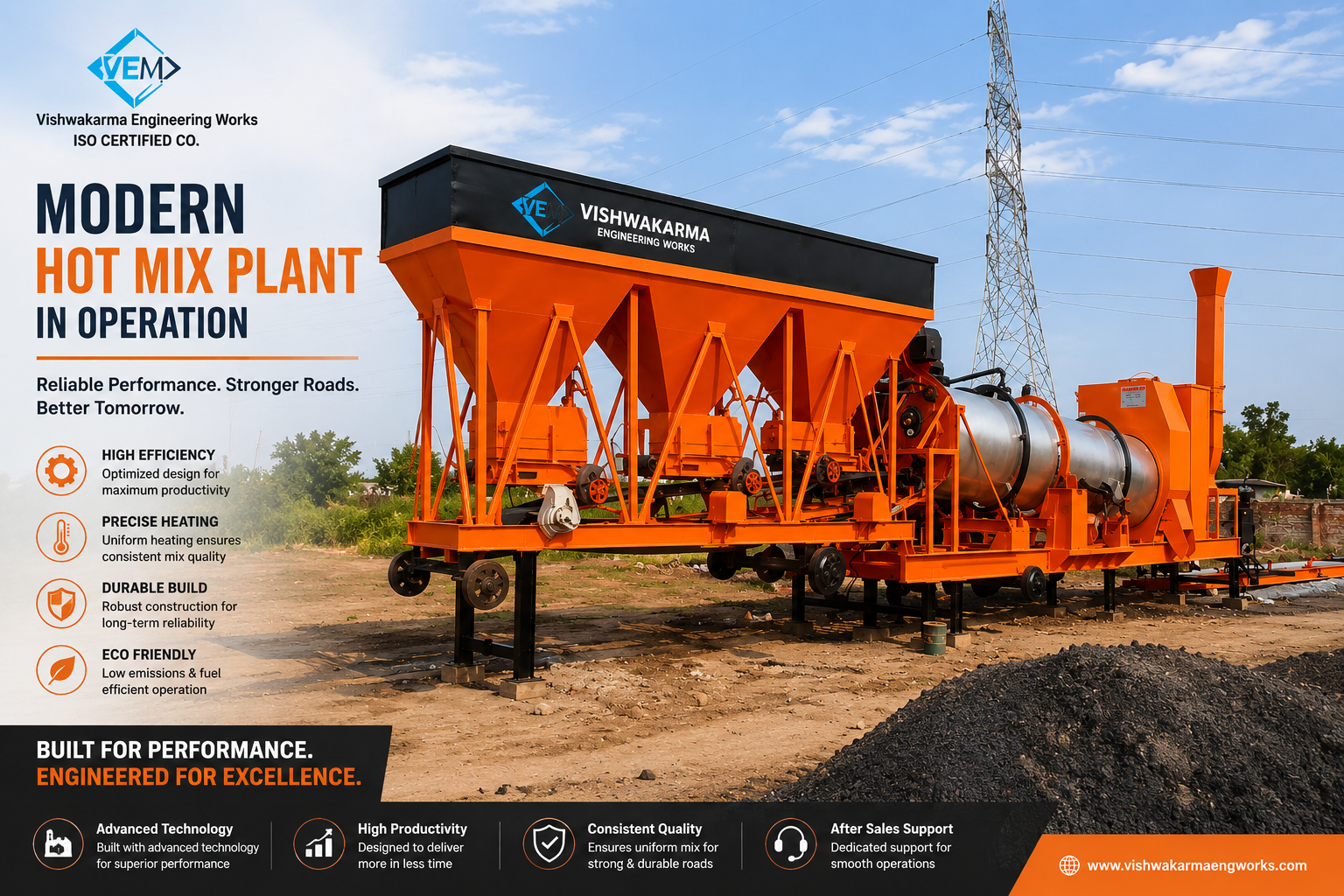
When planning a road construction project, one of the most important decisions is selecting the right hot mix plant. Many contractors often wonder how to choose hot mix plant that matches their project requirements, production capacity, and budget. The right plant not only ensures consistent asphalt quality but also helps reduce fuel consumption, maintenance costs, and project delays.
A poorly selected hot mix plant can lead to frequent breakdowns, higher operating expenses, inconsistent asphalt mixes, and missed project deadlines. On the other hand, choosing a reliable and efficient plant improves productivity, delivers better road quality, and provides long-term returns on investment.
Whether you are working on village roads, state highways, or national highway projects, understanding your production requirements, plant capacity, mobility, fuel efficiency, and after-sales support is essential before making a purchase.
In this comprehensive buying guide, you’ll learn everything you need to know about how to choose hot mix plant, including capacity selection, mobile vs. stationary plants, fuel options, build quality, automation, maintenance, and the key questions every buyer should ask before investing.
Why Choosing the Right Hot Mix Plant Matters
Selecting the right hot mix plant is not just about purchasing equipment—it’s about ensuring the success of your road construction project. The quality and efficiency of your asphalt production directly affect construction speed, operating costs, and the durability of the finished road.
Better Road Quality
A high-quality hot mix plant produces a consistent asphalt mix with accurate proportions of aggregates, bitumen, and filler materials. Uniform mixing results in stronger and smoother roads that require less maintenance over time.
Lower Operating Costs
Fuel consumption, maintenance expenses, and downtime significantly impact the total cost of ownership. Choosing an energy-efficient plant with reliable components helps reduce operating expenses throughout its lifespan.
Faster Project Completion
A plant that matches your required production capacity ensures uninterrupted asphalt supply, allowing construction teams to complete projects on schedule without unnecessary delays.
Consistent Asphalt Mix
Modern hot mix plants feature advanced control systems that maintain precise temperatures and accurate material proportions. This consistency improves road performance and reduces material wastage.
Long-Term Return on Investment (ROI)
Although a high-quality hot mix plant may require a larger initial investment, lower maintenance costs, improved fuel efficiency, and longer service life make it more economical over the long term.
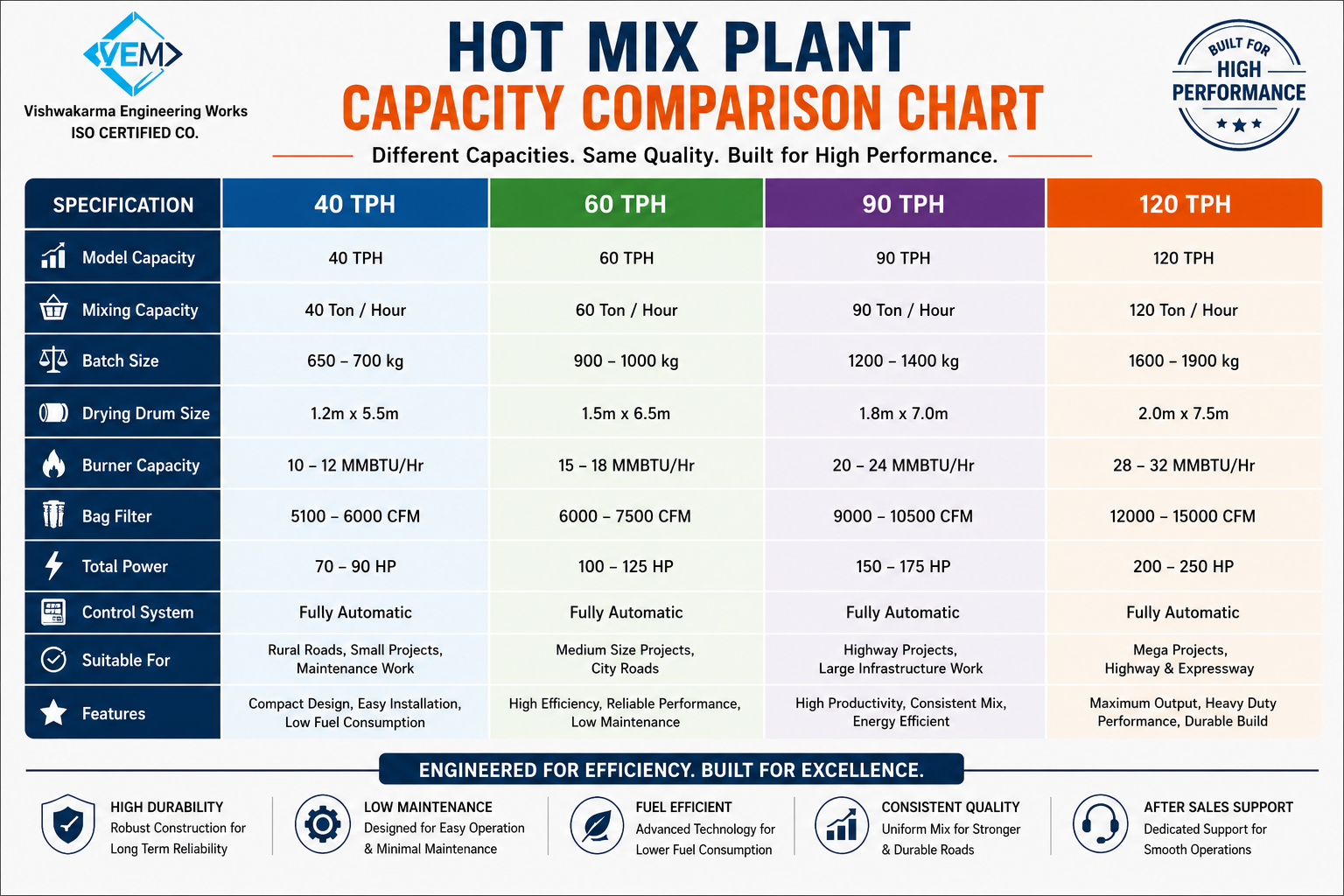
Hot Mix Plant Capacity Comparison Chart
Understand Your Project Requirements
Before comparing different hot mix plants, evaluate the specific needs of your project. Factors such as project size, location, daily production requirements, and future expansion plans all influence the type of plant you should choose.
Project Size
Village Roads
Village road projects generally require smaller production capacities and flexible equipment. Mobile hot mix plants with capacities between 40–60 TPH are often suitable for these applications.
State Highways
State highway construction demands moderate production capacity with consistent asphalt quality. Contractors commonly prefer plants capable of producing 60–90 TPH to meet project timelines.
National Highways
Large-scale highway projects require high-capacity hot mix plants capable of continuous production. Plants with capacities of 100 TPH or more are ideal for handling large infrastructure projects efficiently.
Daily Asphalt Production Requirement
Understanding your daily asphalt demand helps prevent underutilization or overloading of the plant.
40 TPH
Ideal for:
- Rural road projects
- Small contractors
- Repair and maintenance work
- Local government projects
60 TPH
Suitable for:
- Medium-sized road construction
- Municipal infrastructure
- District road development
90 TPH
Recommended for:
- Large state highway projects
- Commercial infrastructure
- Multiple ongoing projects
120 TPH
Best suited for:
- National highway construction
- Expressway projects
- Large infrastructure contractors
- High-volume asphalt production
Recommended Capacity Table
| Project Type | Recommended Capacity |
| Small Projects | 40–60 TPH |
| Medium Projects | 60–90 TPH |
| Large Highway Projects | 100+ TPH |
Expert Tip: Choose a hot mix plant with approximately 15–20% additional capacity beyond your current production needs. This provides flexibility for future projects without requiring another investment.
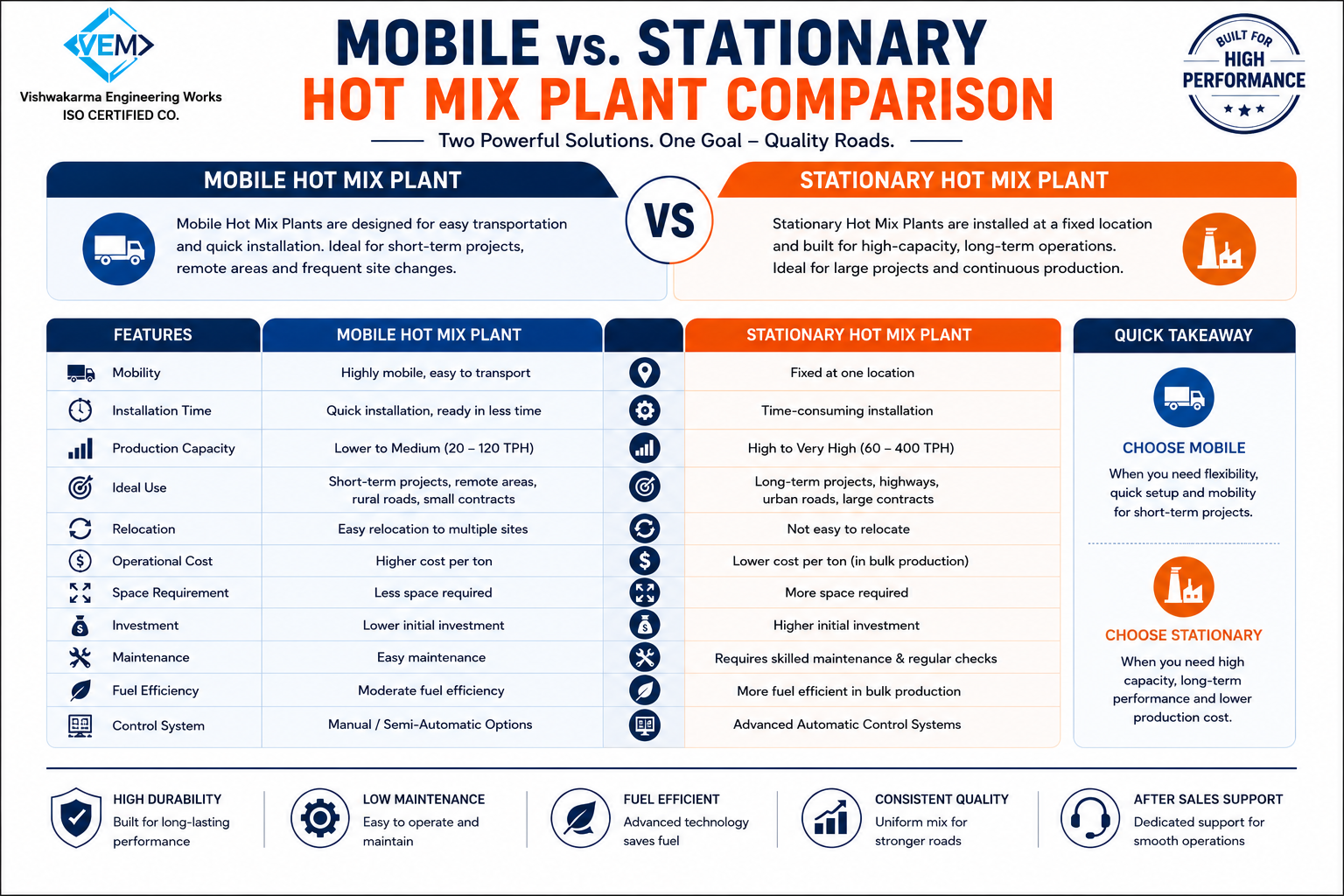
Mobile vs. Stationary Hot Mix Plant Comparison
Mobile or Stationary Hot Mix Plant?
One of the biggest decisions contractors face is whether to invest in a mobile or stationary hot mix plant. The right choice depends on the nature of your projects, project locations, transportation requirements, and long-term business plans.
Mobile Hot Mix Plant
A mobile hot mix plant is designed for easy transportation and quick installation. It is ideal for contractors handling projects at multiple locations where frequent relocation is required.
Advantages
- Easy transportation between sites
- Faster installation
- Lower setup time
- Suitable for remote project locations
- Reduced relocation costs
Explore our Mobile Hot Mix Plant solutions
Stationary Hot Mix Plant
A stationary hot mix plant is installed permanently at a fixed location and is designed for continuous, high-volume asphalt production.
Advantages
- Higher production capacity
- Better suited for long-term projects
- Stable operation
- Ideal for commercial asphalt production
- Greater efficiency for fixed sites
Comparison Table
| Feature | Mobile | Stationary |
| Mobility | ✅ | ❌ |
| Installation Time | Low | High |
| Transportation | Easy | Difficult |
| Best For | Multiple Sites | Fixed Projects |
Which One Should You Choose?
Choose a Mobile Hot Mix Plant if:
- Your projects frequently change locations.
- You require faster setup and relocation.
- You work on government road projects across different districts.
- Transportation flexibility is important.
Choose a Stationary Hot Mix Plant if:
- Your production demand is consistently high.
- Projects are located at one site for an extended period.
- You operate a commercial asphalt production facility.
- Long-term productivity is your priority.
Buying Tip: Don’t select a mobile plant solely because it’s easier to move. If most of your work is concentrated at one location for years, a stationary plant may provide better productivity and lower operating costs over time.
Check Plant Capacity Before Buying
Choosing the right plant capacity is one of the most important factors when deciding how to choose hot mix plant for your road construction business. Buying a plant with insufficient capacity can slow down your project, while purchasing an oversized plant may increase fuel consumption, maintenance costs, and idle operating expenses.
Before making a purchase, evaluate your current project requirements as well as your future business goals. A well-matched capacity ensures smooth operations, better productivity, and improved profitability.
Consider Future Expansion
Many contractors purchase a hot mix plant based only on their current projects. However, as businesses grow, they often take on larger government tenders, highway projects, and commercial contracts.
If you expect your workload to increase over the next few years, investing in a plant with slightly higher capacity can save you from replacing equipment later.
For example, if your current requirement is around 60 TPH, choosing a 90 TPH plant may provide greater flexibility for future expansion.
Plan for Peak Production
Road construction projects often have strict deadlines. During peak construction seasons, asphalt demand can increase significantly.
A hot mix plant should be capable of handling peak production without compromising asphalt quality or causing unnecessary downtime.
When evaluating plant capacity, ask yourself:
- What is my maximum daily asphalt requirement?
- Will I work on multiple projects simultaneously?
- Can the plant operate continuously during long working hours?
Selecting the right production capacity helps maintain uninterrupted asphalt supply throughout the project.
Avoid Excessive Idle Capacity
While buying a larger plant may seem like a future-proof investment, excessive capacity can increase operational costs.
An oversized plant may result in:
- Higher fuel consumption
- Increased maintenance expenses
- Underutilized equipment
- Higher operating costs per ton of asphalt
The goal is to choose a plant that balances your present requirements with future growth opportunities.
Expert Tip: Instead of buying the biggest available plant, choose one that can comfortably meet your current production while allowing room for moderate business expansion.
Fuel Efficiency Matters
Fuel is one of the largest recurring expenses in operating a hot mix plant. Even a small improvement in fuel efficiency can significantly reduce operating costs over the life of the equipment.
Before purchasing a plant, compare the available burner options and understand how they affect production costs.
Diesel Burner
Diesel burners are widely used because of their easy availability and reliable performance.
Advantages
- Easy to operate
- Suitable for remote project locations
- Quick start-up
- Reliable heat generation
Considerations
- Higher fuel costs compared to some alternatives
- Fuel price fluctuations can increase operating expenses
LDO Burner
LDO (Light Diesel Oil) burners are preferred by many contractors for their stable performance and relatively economical operation.
Benefits
- Better combustion efficiency
- Consistent heating
- Reduced operating cost in suitable regions
- Reliable long-term performance
Gas Burner (Where Applicable)
In areas where natural gas infrastructure is available, gas burners can offer significant fuel savings and cleaner combustion.
Benefits
- Lower emissions
- Better fuel efficiency
- Cleaner operation
- Reduced maintenance due to cleaner combustion
Availability depends on the project’s location and local gas supply.
Why Fuel Cost Should Never Be Ignored
Many buyers focus only on the initial purchase price of the hot mix plant. However, fuel costs continue throughout the machine’s operating life and often represent one of the largest ongoing expenses.
A fuel-efficient hot mix plant can provide:
- Lower cost per ton of asphalt produced
- Improved profit margins
- Reduced environmental impact
- Better long-term return on investment
Buying Tip: Always ask the manufacturer for estimated fuel consumption per hour or per ton of asphalt produced before making your purchase decision.
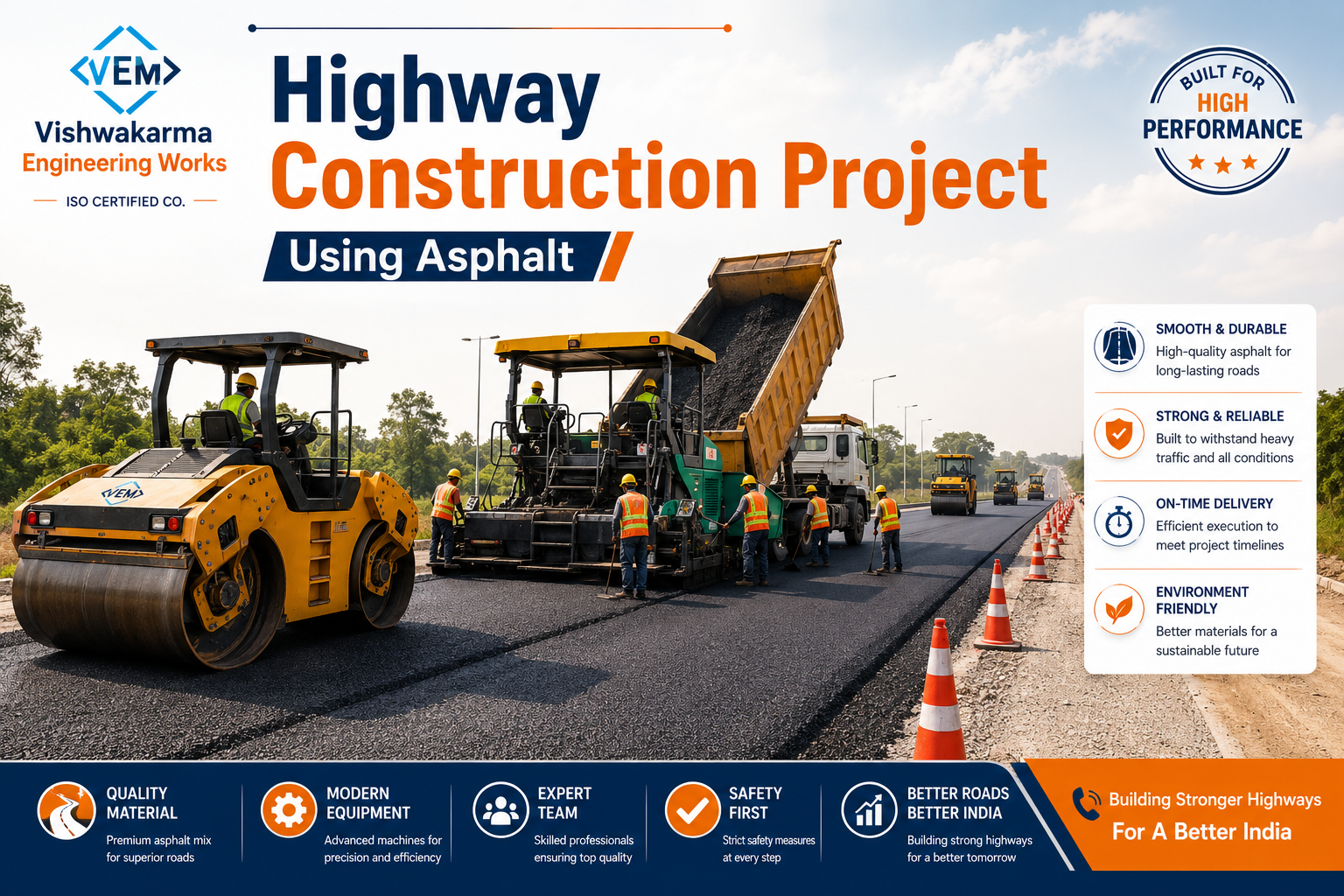
Highway Construction Project Using Asphalt
Asphalt Mix Quality
Producing high-quality asphalt is the primary purpose of any hot mix plant. Roads constructed with a consistent asphalt mix generally offer better durability, smoother surfaces, and longer service life.
A good hot mix plant should ensure every batch meets the required quality standards.
Accurate Mixing
Accurate proportioning of aggregates, bitumen, and filler materials is essential for producing a strong asphalt mix.
Modern plants use advanced control systems to maintain precise material ratios throughout production.
Benefits include:
- Better road strength
- Reduced material wastage
- Improved consistency
- Enhanced pavement performance
Temperature Control
Maintaining the correct mixing temperature is critical.
If the temperature is too low:
- Poor coating of aggregates
- Reduced workability
- Lower road durability
If the temperature is too high:
- Bitumen may degrade
- Higher fuel consumption
- Reduced asphalt quality
Reliable temperature control systems help achieve consistent asphalt production while minimizing energy consumption.
Uniform Coating
Every aggregate particle should receive an even coating of bitumen.
Proper coating ensures:
- Better bonding
- Increased pavement strength
- Improved resistance to water damage
- Longer road life
Uniform coating also reduces segregation and improves the finished road surface.
Build Quality & Materials
The durability of a hot mix plant largely depends on the quality of materials and components used in its construction.
A well-built plant requires less maintenance, offers longer service life, and performs reliably under demanding working conditions.
Heavy-Duty Steel Structure
The plant frame should be manufactured using high-quality heavy-duty steel capable of handling continuous vibration, heavy loads, and harsh operating environments.
A strong structure improves stability and extends the life of the equipment.
Corrosion Resistance
Road construction sites are exposed to dust, moisture, rain, and changing weather conditions.
Corrosion-resistant materials and protective coatings help prevent rust and reduce maintenance requirements.
Durable Drying Drum
The drying drum is one of the hardest-working components of a hot mix plant.
Look for features such as:
- High-quality steel construction
- Efficient heat transfer
- Wear-resistant lining
- Long operating life
A durable drum improves fuel efficiency and minimizes maintenance costs.
Bearings & Gearbox Quality
Bearings and gearboxes play a crucial role in smooth plant operation.
High-quality components offer:
- Reduced vibration
- Lower maintenance
- Improved reliability
- Longer service life
- Reduced downtime
Always check the quality and brand of major mechanical components before purchasing.
Pollution Control Features
Environmental regulations have become increasingly important in road construction projects. A modern hot mix plant should comply with applicable pollution control standards while minimizing dust emissions.
Investing in a plant with effective pollution control systems not only helps meet regulatory requirements but also creates a safer working environment.
Dust Collector
A dust collection system captures fine particles generated during asphalt production.
Benefits include:
- Cleaner working environment
- Reduced air pollution
- Lower material loss
- Improved plant efficiency
Pollution Control Unit
A pollution control unit helps reduce harmful emissions released during plant operation.
Modern systems are designed to improve air quality while ensuring smooth production.
Environmental Compliance
Before purchasing a hot mix plant, confirm that it meets the pollution control requirements applicable in your project location.
Compliance helps:
- Avoid legal issues
- Reduce environmental impact
- Improve workplace safety
- Increase project eligibility for government contracts
Expert Tip: Choosing a plant with an efficient dust collection and pollution control system can save both compliance costs and maintenance expenses over the long term.
Automation & Control Panel
Modern hot mix plants are equipped with advanced automation systems that simplify operations, improve production accuracy, and reduce the chances of human error. An efficient control panel enables operators to monitor and manage the entire asphalt production process from a single interface.
PLC-Based Control System
A Programmable Logic Controller (PLC) automates key functions such as material feeding, mixing, temperature regulation, and burner operation. This improves production consistency while reducing manual intervention.
Benefits of PLC Automation:
- Precise process control
- Reduced operator dependency
- Consistent asphalt quality
- Improved production efficiency
- Lower risk of operational errors
Touchscreen Controls
User-friendly touchscreen panels make it easy for operators to adjust production settings, monitor plant performance, and respond quickly to alerts.
Advantages include:
- Easy navigation
- Real-time monitoring
- Faster troubleshooting
- Improved operational efficiency
Automatic Batching
Automatic batching systems ensure that aggregates, bitumen, and filler materials are measured accurately before mixing. This minimizes material wastage and produces a uniform asphalt mix.
Error Monitoring
Advanced control systems continuously monitor plant performance and notify operators if any abnormalities occur.
Examples include:
- Burner malfunction alerts
- Temperature deviations
- Material shortage warnings
- Motor overload notifications
Early detection helps prevent costly breakdowns and unexpected project delays.
Maintenance Requirements
A hot mix plant is a long-term investment, and regular maintenance plays a major role in ensuring reliable performance and extending equipment life. Choosing a plant that is easy to maintain can significantly reduce downtime and repair costs.
Easy Servicing
Look for a plant designed with easy access to critical components such as:
- Burner
- Drying drum
- Conveyors
- Filters
- Bearings
- Gearbox
Quick access simplifies inspections and routine maintenance.
Spare Parts Availability
Even the best equipment requires replacement parts over time. Before purchasing a hot mix plant, confirm that genuine spare parts are readily available.
Consider asking:
- Are spare parts stocked locally?
- What is the average delivery time?
- Are critical components easily available?
Easy access to spare parts helps minimize downtime during repairs.
Operator Training
A well-trained operator can improve plant efficiency, reduce fuel consumption, and prevent unnecessary wear on equipment.
Many reputable manufacturers provide:
- On-site operator training
- Maintenance guidance
- Safety instructions
- Operational manuals
Proper training ensures smooth plant operation from day one.
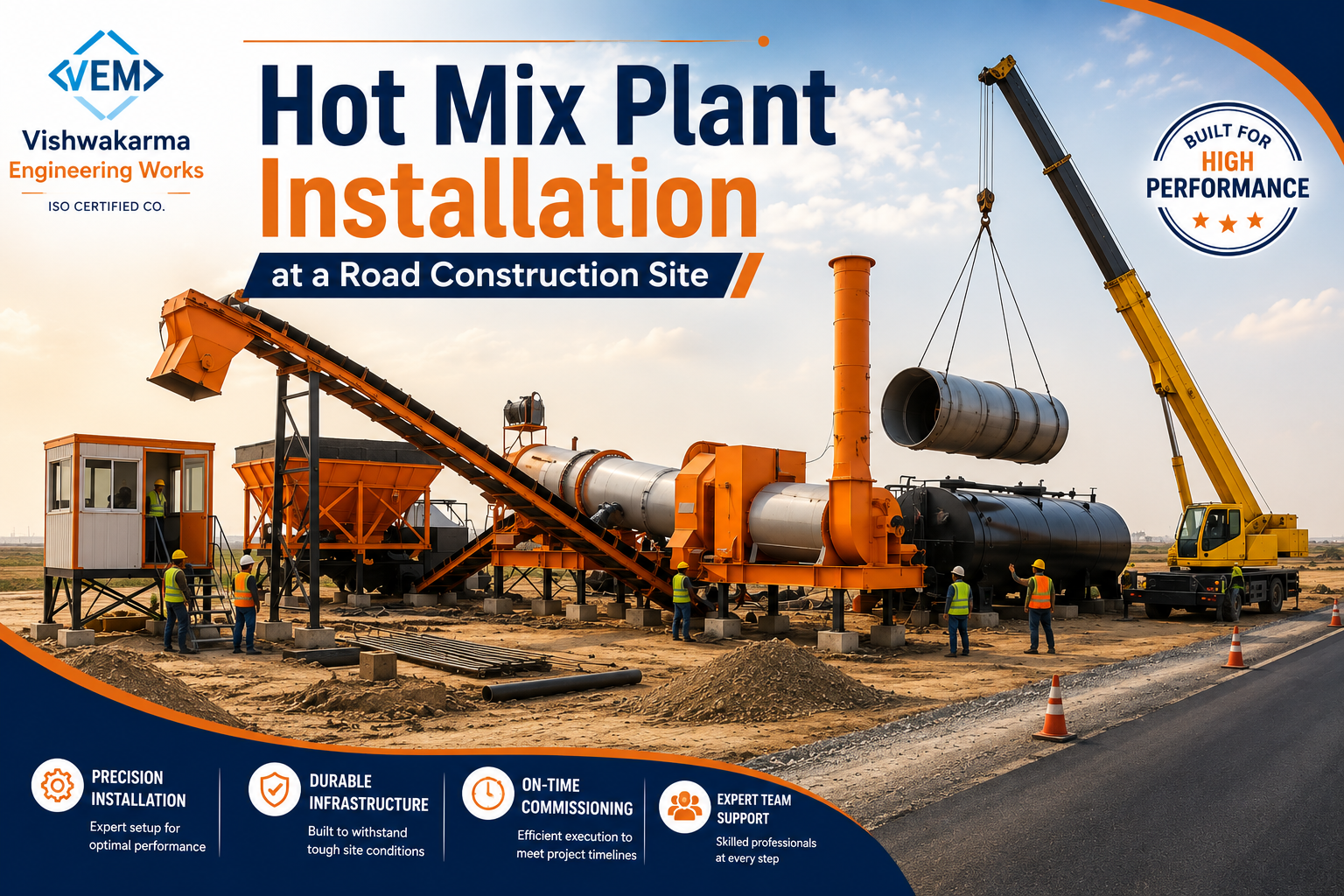
Hot Mix Plant Installation at a Road Construction Site
After-Sales Service
After-sales support is one of the most important factors to consider when choosing a hot mix plant manufacturer. Even a high-quality machine may require technical assistance, maintenance, or spare parts during its operational life.
Reliable after-sales service minimizes downtime and ensures uninterrupted project execution.
Installation
Professional installation ensures the plant is assembled correctly and performs according to design specifications.
Commissioning
During commissioning, technicians test all major systems, calibrate equipment, and verify production quality before handing over the plant.
Annual Maintenance Contract (AMC)
An AMC provides scheduled inspections, preventive maintenance, and technical support to keep the plant operating efficiently.
Benefits include:
- Reduced breakdowns
- Longer equipment life
- Lower maintenance costs
- Improved plant performance
Spare Parts Support
Choose a manufacturer that maintains a ready inventory of genuine spare parts to avoid lengthy project delays.
Technical Support
Fast technical assistance is essential when unexpected issues arise. A responsive support team can help troubleshoot problems remotely or provide on-site service when required.
Buying Tip: Before finalizing your purchase, ask about the manufacturer’s service network, response time, and availability of field engineers in your region.
Questions to Ask Before Buying a Hot Mix Plant
Before making your investment, ask the manufacturer these important questions:
✔ What is the plant’s actual production capacity?
✔ What warranty is provided?
✔ How much fuel does the plant consume per hour?
✔ What is the expected delivery time?
✔ Does the company provide installation and commissioning?
✔ Are genuine spare parts readily available?
✔ Will operator training be provided?
✔ Does the plant comply with pollution control regulations?
✔ What automation features are included?
✔ What type of after-sales support is available?
These questions help you compare manufacturers and make an informed purchasing decision.
Why Contractors Choose Vishwakarma Engineering Works
After understanding the key factors involved in selecting the right hot mix plant, choosing a reliable manufacturer becomes equally important.
Vishwakarma Engineering Works has established itself as a trusted manufacturer of road construction machinery by focusing on quality, performance, and customer satisfaction.
Extensive Manufacturing Experience
With years of industry expertise, the company designs and manufactures equipment that meets the requirements of contractors working on projects of all sizes.
Wide Product Range
Vishwakarma Engineering Works offers a comprehensive range of road construction equipment, including:
This enables customers to source multiple machines from a single manufacturer.
PAN India Supply
The company supplies machinery across India, ensuring timely delivery and reliable logistics support for contractors in different regions.
Customization Options
Every project has unique requirements. Vishwakarma Engineering Works offers customized solutions based on production capacity, site conditions, and customer preferences.
Technical Support
From installation and commissioning to maintenance assistance and spare parts support, the company provides comprehensive technical services to help customers maximize equipment performance.
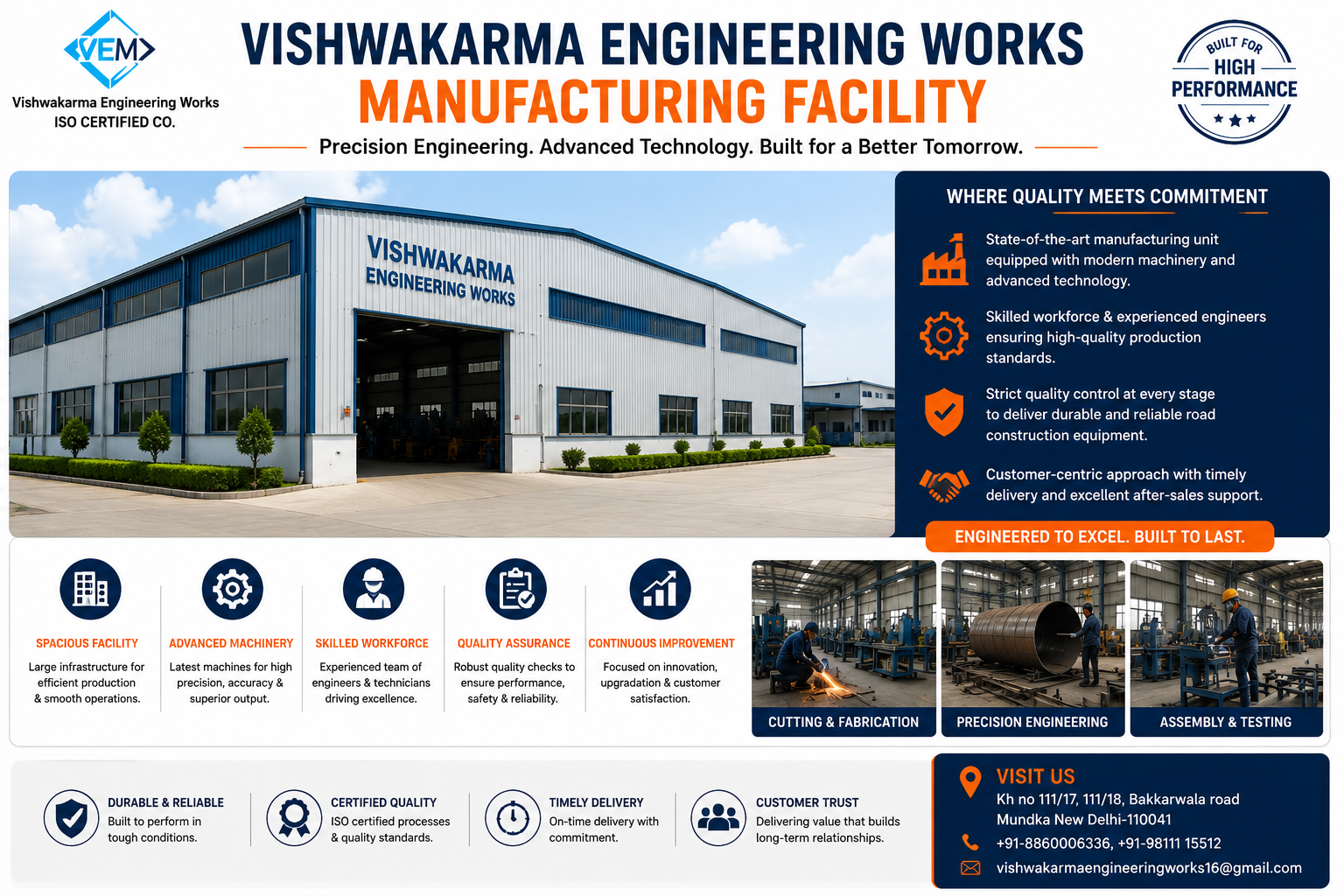
Vishwakarma Engineering Works Manufacturing Facility
Final Checklist Before Purchasing
Before placing your order, review the following checklist to ensure you select the right hot mix plant for your business.
| Checklist | Status |
| ✅ Plant Capacity Matches Project Requirements | ☐ |
| ✅ Budget Fits Total Investment | ☐ |
| ✅ Fuel Type is Economical | ☐ |
| ✅ Mobile or Stationary Plant Selected | ☐ |
| ✅ Warranty Details Confirmed | ☐ |
| ✅ After-Sales Service Available | ☐ |
| ✅ Spare Parts Availability Verified | ☐ |
| ✅ Pollution Control Compliance Confirmed | ☐ |
| ✅ Automation Features Checked | ☐ |
| ✅ Installation & Training Included | ☐ |
Final Thoughts on Choosing a Hot Mix Plant
Selecting the right hot mix plant is a strategic investment that directly impacts road quality, project timelines, operating costs, and long-term profitability. Instead of focusing solely on the purchase price, evaluate factors such as production capacity, fuel efficiency, automation, build quality, maintenance requirements, pollution control features, and after-sales support.
By understanding how to choose hot mix plant based on your specific project requirements, you can make an informed decision that delivers reliable performance for years to come.
If you’re looking for high-quality road construction equipment backed by professional support, Vishwakarma Engineering Works offers a wide range of solutions designed to meet the needs of contractors across India.
Ready to find the right hot mix plant for your next project?
- Contact our experts for personalized guidance.
- Request a detailed quotation based on your project requirements.
- Explore our range of road construction machinery to find the ideal solution for your business.
How do I choose the right hot mix plant?
Consider your project size, required production capacity, fuel efficiency, mobility, automation features, build quality, and after-sales service before making a decision.
Which capacity is best for highway construction?
Large highway projects typically require hot mix plants with capacities of 100 TPH or higher, depending on daily asphalt production needs.
Is a mobile hot mix plant better than a stationary plant?
A mobile hot mix plant is ideal for contractors working at multiple project locations, while a stationary plant is better suited for long-term, high-volume production at a fixed site.
What is the ideal fuel consumption for a hot mix plant?
Fuel consumption varies depending on plant capacity, burner type, and operating conditions. Manufacturers should provide estimated fuel usage during the buying process.
How much maintenance does a hot mix plant require?
Routine maintenance includes lubrication, filter cleaning, inspection of bearings, burner servicing, and checking conveyors, drums, and gearboxes to ensure reliable operation.
Which hot mix plant is suitable for small contractors?
Small contractors generally prefer 40–60 TPH mobile hot mix plants, as they are easier to transport and economical for smaller projects.
What factors affect asphalt quality?
Accurate material proportioning, proper temperature control, efficient mixing, and uniform bitumen coating all contribute to producing high-quality asphalt.
How important is after-sales support?
Reliable after-sales service helps minimize downtime by providing installation assistance, maintenance support, spare parts, and technical guidance throughout the plant’s lifecycle.
How long does it take to install a hot mix plant?
Installation time depends on the plant type. Mobile plants are generally quicker to install than stationary plants, which require more extensive site preparation.
Which hot mix plant offers the best ROI?
The best return on investment comes from a plant that balances production capacity, fuel efficiency, build quality, and dependable after-sales support while matching your project requirements.
What pollution control features should a hot mix plant have?
A modern hot mix plant should include a dust collector, pollution control unit, and systems that comply with environmental regulations to reduce emissions and improve workplace safety.
Why is automation important in a hot mix plant?
Automation improves production accuracy, reduces manual errors, minimizes material wastage, enhances efficiency, and ensures consistent asphalt quality.