

Blog
Mobile Hot Mix Plant Price in India

Mobile Hot Mix Plant Price in India: Complete Buying Guide for Contractors and Road Construction Companies
Road infrastructure development in India is expanding rapidly in 2026, creating a higher demand for efficient and cost-effective road construction equipment. One of the most important machines for modern road projects is the Mobile Hot Mix Plant. Contractors, construction companies, and infrastructure developers are actively searching for questions such as “What is the Mobile Hot Mix Plant price in India?”, “Which capacity should I buy?”, and “How can I choose the right manufacturer?”
If you are planning to invest in a Mobile Hot Mix Plant, understanding pricing and key factors affecting the overall investment can help you make the right decision.
What is a Mobile Hot Mix Plant?
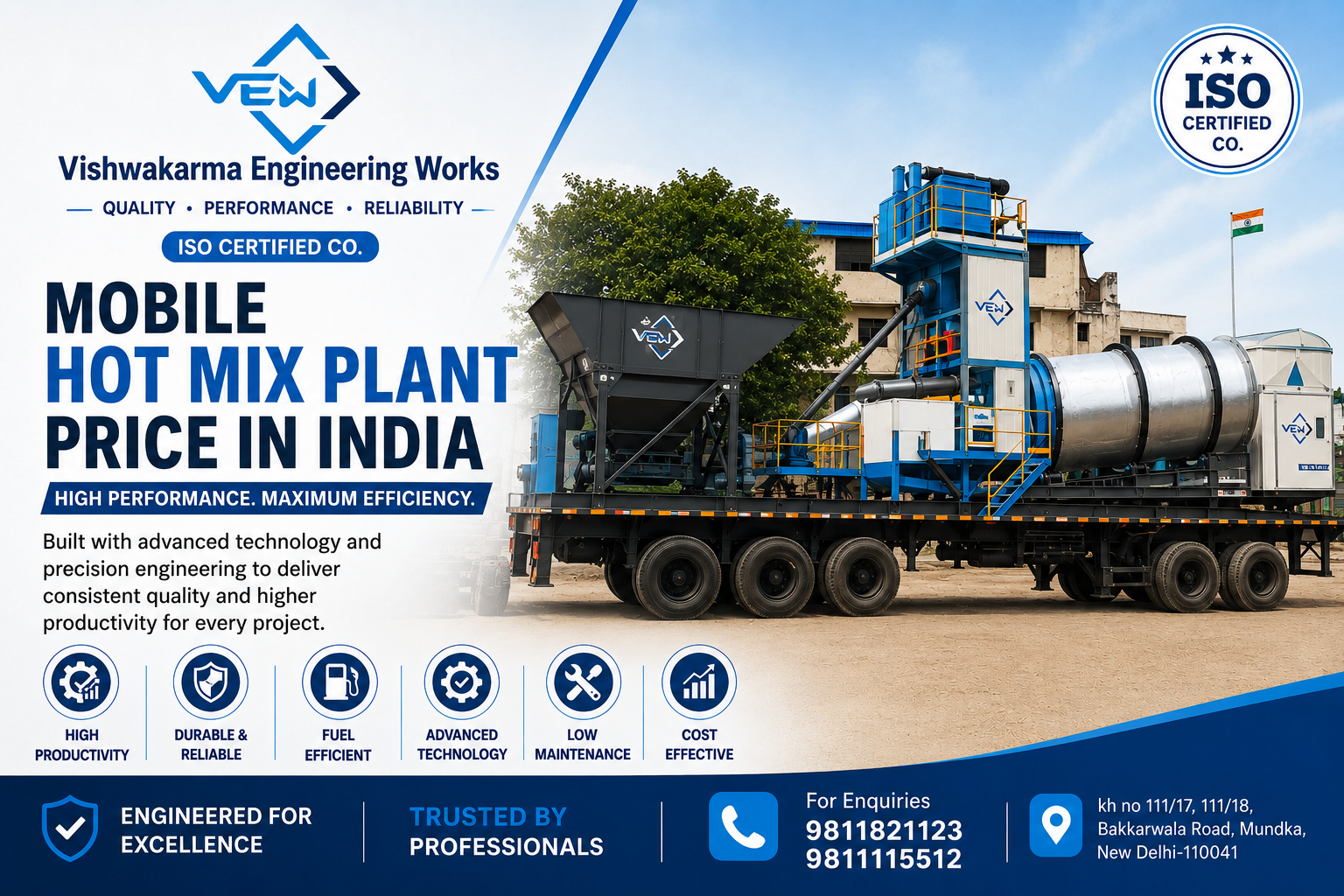
A Mobile Hot Mix Plant is a portable asphalt production system designed to produce hot asphalt mixtures used for road construction and maintenance projects. Unlike stationary plants, mobile plants can be transported easily from one project location to another, making them highly suitable for contractors handling multiple sites.
These plants are commonly used for:
- Highway construction projects
• Road repair and maintenance
• Airport runway construction
• Industrial roads
• Smart city infrastructure projects
• Rural road development
Their mobility helps reduce transportation costs and setup time while increasing project efficiency.
Mobile Hot Mix Plant Price in India
The cost of a Mobile Hot Mix Plant depends on several factors such as plant capacity, automation level, technology, and additional features. Industry pricing trends in India indicate the following approximate ranges:
Approximate Price by Capacity
10–30 TPH: ₹15 Lakhs – ₹30 Lakhs
40–60 TPH: ₹25 Lakhs – ₹45 Lakhs
80–120 TPH: ₹45 Lakhs – ₹80 Lakhs
120–160+ TPH: ₹80 Lakhs – ₹2 Crore+
Actual pricing may vary depending on customization requirements and manufacturer specifications.
Factors That Affect Mobile Hot Mix Plant Prices
1. Plant Capacity
Higher-capacity plants produce more asphalt per hour, increasing productivity but also increasing investment cost.
2. Automation Technology
Modern 2026 buyers prefer fully automatic systems with PLC controls and smart monitoring systems. Advanced automation generally increases pricing but improves long-term efficiency.
3. Fuel Consumption
Fuel efficiency directly impacts operating costs. Plants with optimized burners and energy-saving systems reduce overall expenses.
4. Mobility Features
Portable systems with quick installation and transportation features may cost more initially but save considerable operational costs over time.
5. Build Quality
Heavy-duty steel structures and premium components generally provide better durability and lower maintenance costs.
Why Mobile Hot Mix Plants Are Popular in 2026
Modern contractors are no longer searching only for low prices. Today’s buyers focus on:
- Lower operating costs
• High production output
• Smart automation
• Fast setup and relocation
• Reduced fuel consumption
• Long equipment lifespan
• Better return on investment
Mobile plants have become popular because they support multiple projects without requiring permanent installations.
How to Choose the Right Mobile Hot Mix Plant
Before purchasing, consider these points:
- Identify your project size and production requirements
• Calculate future workload requirements
• Compare fuel efficiency
• Check maintenance requirements
• Verify after-sales support
• Review manufacturer experience
• Ensure spare part availability
Selecting a reliable manufacturer is as important as selecting the machine itself.
What is the average cost of this type of road construction equipment in India?
The overall cost depends on machine capacity, automation level, features, and customization requirements. Small-capacity units usually cost less compared to high-production industrial systems.
Which production capacity should I choose for my project?
The ideal capacity depends on project size and daily production needs. Medium-sized projects generally require moderate output, while large infrastructure projects need higher production capacity.
Is a portable setup better than a fixed installation?
Portable systems provide greater flexibility and are suitable for projects that require frequent movement between multiple locations. Fixed setups are usually preferred for long-term operations at a single site.
Which factors should be checked before purchasing?
You should review machine quality, fuel efficiency, automation features, maintenance requirements, spare part availability, and after-sales support.
Why do construction companies prefer advanced equipment today?
Modern systems help improve productivity, reduce operating costs, minimize material wastage, and support faster project completion.